Best Time to Visit Lobos Island: Weather, Sea & Crowds
September is the best overall time for a day on Lobos Island, with the warmest sea of the year and dry, warm weather for the walk. This guide compares the months, explains how the island authorisation and the ferry returns work through the year, and lets you check the wind and waves for your own date.
If your dates are already fixed, use the date checker below to see whether the ferries normally sail that day, the wind and wave forecast for the crossing, and how warm the sea is for a swim.
Lobos can be visited year-round. Ferries cross from Corralejo every day, weather permitting, with more sailings in summer, and every visitor needs a free island authorisation for a morning or an afternoon visit. Places in each window are limited, so apply on LobosPass, the island government’s booking site, when your date opens, five days ahead. On the day, wind and waves matter most. Strong wind or a big swell makes the 15 to 20-minute crossing rough and can lead operators to cancel sailings in any month, with a new date or a refund. Check the wind and wave forecast the day before.
If your dates are flexible, September offers the best overall balance for a visit with a walk and a swim: the sea is at its warmest, about 23°C, rain is rare and average highs are about 28°C. October is a close second, with a similar sea, slightly cooler days and a little more chance of a shower. From December to April, highs of about 21 to 23°C suit walking, but the sea cools to about 19°C.
If fewer crowds matter most, choose May or June, among the quieter months for arrivals on Fuerteventura as a whole, although the sea is cooler, about 20 to 21°C. The number of visitors allowed on Lobos is the same in every month, so a quieter month mainly means less competition for authorisation places. From June to October, a morning window is cooler for the longer walks. Outside July to September, some last boats leave Lobos around 17:00, which cuts an afternoon visit to about three hours.
- Best overall for walking and swimming:
- September
- Close second, slightly cooler days:
- October
- Quieter months on Fuerteventura, cooler sea:
- May and June
- Warmest weather, authorisations in demand:
- July and August
- Warm sea, milder days, a few showers:
- November
- Easy walking, coolest sea:
- December to April
- Most important checks for your date:
- Wind, gusts and wave height
- About 23°C against 19°C sea temperature off Corralejo in September against February and March, for a swim at La Concha
- About 21°C to 28°C average highs from January to August, on an island with almost no shade
- 200 people the most allowed on Lobos in each morning and afternoon authorisation window
Check Availability
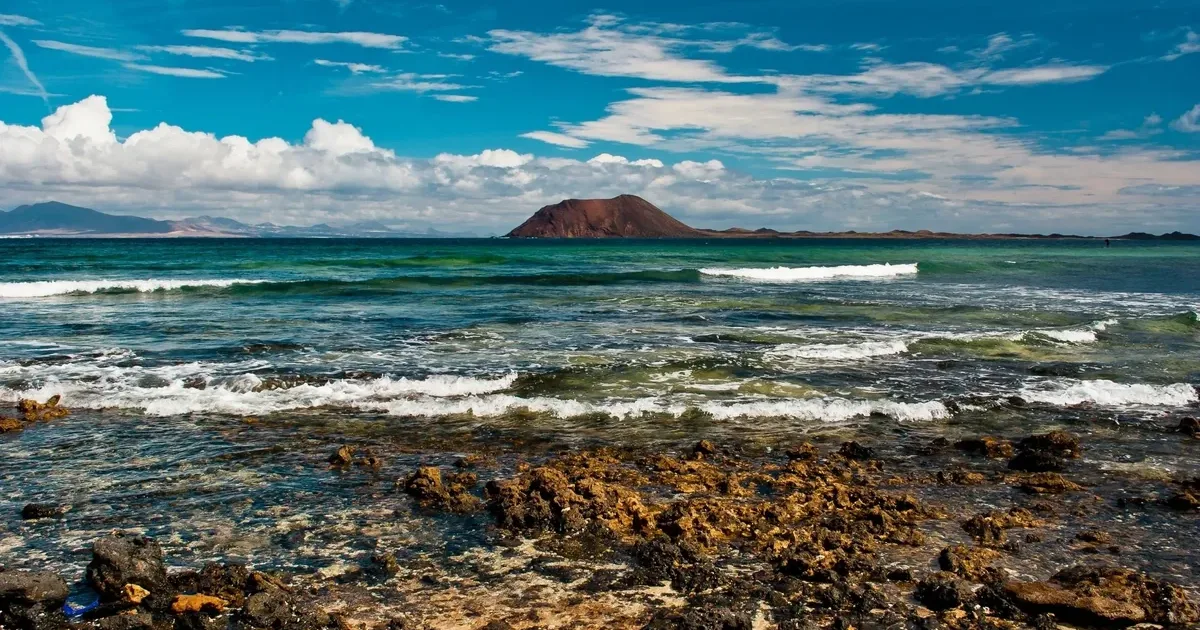
What each month is like on Lobos
A visit to Lobos is half a day on a small, dry volcanic island: a short ferry ride, then the walk to La Concha, the climb up La Caldera or the loop to the lighthouse, and usually a swim. Almost all of it is outdoors, and there is very little shade, so the sea and the sun shape the day more than anything else the calendar does.
September and October. The sea off Corralejo is at its warmest, about 23°C, so a long swim at La Concha is comfortable for most people. Average highs are about 28°C in September and 26°C in October, warm for the walk to the lighthouse, and rain is rare: about one day with rain in September and two in October in an average year. Nortour’s summer timetable, with its last return at 18:00, runs to the end of September.
November. The sea is still about 21°C and highs are about 24°C, a pleasant mix for walking and swimming. Showers become a little more frequent, about two days a month.
December to April. Highs of about 21 to 23°C make this the easiest time for the longer walks, and the sea cools to about 19°C, a brisk swim, and snorkellers may want a wetsuit; see our guide to winter sea temperatures and beaches. December is the wettest month, with about three days of rain. Outside July to September, Nortour’s last return is usually 17:00, so plan the afternoon around it.
May and June. The island is dry and highs reach about 24 to 26°C. The sea is warming but still cool, about 20 to 21°C. These were the two months with the fewest tourists flying into Fuerteventura in both 2024 and 2025.
July and August. The warmest weather, with highs of about 27 to 28°C and long, dry days, and the sea at about 21 to 22°C. This is the main holiday season for Spanish and Canarian families, and demand for the island authorisation is at its highest: local reports in August 2025 described up to 1,200 people a day landing on Lobos, three times the 400 the park allows. Apply the day your date opens and keep the longer walks for the morning.
The authorisation and the ferry returns through the year
The island authorisation works the same way in every month. Lobos is a natural park, and its management plan allows up to 400 visitors a day: 200 in the morning window, from 10:00 to 14:00, and 200 in the afternoon window, from 14:00 to 18:00. You apply free on LobosPass, the Cabildo’s booking site, from five days before your visit until three hours before it, for up to three people per application. Confirm the email within 24 hours. The permit guide explains which ferry tickets arrange it for you.
The ferries change more than the authorisation does. Nortour’s return ferry lists usual returns at 11:40, 14:20 and 17:00, and from July to September its last boat back leaves Lobos at 18:00. Ferry Isla de Lobos lists a last return at 18:15 and says its times vary with the season. Nortour does not sail on 1 and 6 January, 16 July, the day of Corralejo’s Virgen del Carmen festival, or 25 December. Check your return against your window: with a 17:00 last boat, an afternoon visit is about three hours ashore at most. The timetable guide compares the operators’ returns.
Lobos and Fuerteventura weather by month
These are long-term averages for Fuerteventura Airport, on the east coast south of Corralejo, and monthly sea temperatures off Corralejo. Lobos is low, dry and about 2 km offshore, so expect similar temperatures, often with more wind on the open parts of the island.
| Month | Average high and low | Days with rain | Sea | For a day on Lobos |
|---|---|---|---|---|
| January | 21°C and 15°C | about 2 or 3 | about 19°C | Easy walking; brisk swim |
| February | 21°C and 15°C | about 2 | about 19°C | Easy walking; coolest sea |
| March | 22°C and 16°C | about 2 | about 19°C | Easy walking; coolest sea |
| April | 23°C and 16°C | about 1 | about 19°C | Easy walking; cool sea |
| May | 24°C and 17°C | rare | about 20°C | Dry and warm; sea warming |
| June | 26°C and 19°C | rare | about 21°C | Dry and warm; walk in the morning |
| July | 27°C and 21°C | rare | about 21°C | Hot by midday; main holiday month |
| August | 28°C and 22°C | rare | about 22°C | Hot by midday; main holiday month |
| September | 28°C and 21°C | rare | about 23°C | Warmest sea; walk in the morning |
| October | 26°C and 20°C | about 2 | about 23°C | Warm sea; the odd shower |
| November | 24°C and 18°C | about 2 | about 21°C | Warm sea, milder days |
| December | 22°C and 16°C | about 3 | about 20°C | Easy walking; a few rainy days |
The average high is the typical warmest part of the day, which you meet on the walk around midday, and the low is the coolest part of the night. Any single day can be warmer, cooler or windier than these averages.
Wind, waves and cancelled crossings
The crossing from Corralejo is short, but the strait between Fuerteventura, Lobos and Lanzarote is open to the Atlantic. On a windy day the crossing can be rough, and the small speedboats feel it most; our guide to Lobos Island in winter covers planning a trip around the wind. If wind or sea conditions are unsafe, operators cancel sailings, with a new date or a refund; Ferry Isla de Lobos says a cloudy day does not count as bad weather.
The trade winds, the steady north-easterly winds of the Canaries, are usually strongest in summer, and northerly swells reach the north coast more often between autumn and spring. These are tendencies, and a calm day or a rough one can come in any month, so the forecast for your date tells you more than the season. Check the wind and wave forecast the day before and messages from your operator on the morning. Your authorisation is for one date and one window, so if a sailing is cancelled, apply again for the new date.
Morning or afternoon on Lobos
The morning window, from 10:00 to 14:00, gives you the cooler part of the day for the walk up La Caldera, about an hour and a half there and back, or the island loop past the lighthouse, about two and a half hours. Our Lobos itinerary by time ashore shows what fits into each window. From June to October that makes it the better window for walking. The afternoon window suits a slower beach visit, especially from July to September, when the later returns give you more time ashore. In the rest of the year, check the last return against your window before you choose the afternoon.
Which boat suits the season
The Nortour return ferry is the steadiest choice on a breezy day and leaves the island time to you; our Nortour ferry guide explains how its return sailings are chosen. The Barracuda Perdomo speedboat is quicker, about 12 to 15 minutes, but bumpier in wind, so keep it for calm days if you are prone to seasickness. When the sea is at its warmest, from July to November, the Nortour ferry-and-snorkel package adds an organised 25-minute snorkel with equipment. A FuerteCharter catamaran trip is a half-day on the water with lunch and a short island stop, and suits a hot summer day when you would rather not walk far.
Check your date
Choose a date to see whether the ferries normally sail that day, what the island authorisation involves, the wind and waves forecast for the crossing, how hot the walk is likely to be and how warm the sea is for a swim. Within about a week of the date the card shows the forecast; further ahead it shows the usual pattern for the month.
In general, ferries cross from Corralejo to Lobos every day of the year, weather permitting, every visitor needs a free authorisation for a morning or afternoon visit, and the sea off Fuerteventura is coolest in late winter and warmest in late summer and early autumn.
Averages are AEMET figures for Fuerteventura Airport; the forecast is from Open-Meteo.
If your booking has free cancellation, you can book once your dates are fixed and look at the forecast again before the deadline; read the booking terms for your ticket first. For the island itself, see our guide to walks, beaches and what to bring, and for the operators and fares, the complete Lobos ferry guide.
How we know
Sources and method
- Weather: AEMET, the Spanish state weather agency, long-term averages for Fuerteventura Airport (station C249I, 1981–2010), read on 30 October 2026: average highs and lows and the average number of days with 1 mm of rain or more. AEMET’s public page does not yet show the 1991–2020 averages for this station. The airport is on the east coast, further south than Corralejo.
- Sea temperature: long-term monthly averages for Corralejo from seatemperature.org, read on 30 October 2026. This is a secondary source built from historical satellite data; we found no official monthly series for these waters.
- The island authorisation: the settings published by LobosPass, the Cabildo de Fuerteventura’s booking platform, read on 30 October 2026: two windows a day, 10:00 to 14:00 and 14:00 to 18:00, 200 visitors each, applications opening five days ahead and closing three hours before, up to three people per application, free. The August 2025 figure of up to 1,200 visitors a day is from RTVC, the Canary Islands public broadcaster; the stronger checks announced for 2026 are from RTVC, 27 September 2026.
- Ferries: Nortour’s GetYourGuide listing (306838), read on 30 October 2026, for the usual returns and the 18:00 last return from July to September; the Spain tourism board’s Lobos Express listing for Nortour’s days without sailings; Ferry Isla de Lobos’s own timetable and cancellation terms. Nortour’s winter last return of 17:00 is reported by Ferryhopper; we found no timetable page of Nortour’s own.
- Visitors: ISTAC, the Canary Islands statistics institute, monthly tourist arrivals to Fuerteventura for 2024 and 2025. It counts tourists arriving by air and leaves out Canary residents, who make up much of the summer and holiday demand for Lobos, so it is a guide to the island as a whole, not a count of people on Lobos.
- Holidays: the Gobierno de Canarias 2027 holiday calendar and Fuerteventura’s 17 September island holiday.
- Wind and swell: we found no official monthly wind or wave series for the strait. The seasonal pattern of stronger summer trade winds and winter northerly swells comes from published descriptions of Fuerteventura’s weather and surf seasons, so the page treats it as a tendency, and the date checker reads the forecast instead.
- What these numbers cannot tell you: no official monthly wind or wave series exists for the strait, so the page cannot say which month has the fewest cancelled crossings, and none of the operators we checked publishes a cancellation count. The arrivals series is not a count of people on Lobos, and the sea temperatures are long-term averages from a secondary source. None of these figures is a forecast for your day.
- Forecast: the date checker reads Open-Meteo’s wind, gust and temperature forecast for Corralejo and its wave forecast for the sea near Lobos, from 9:00 to 18:00, within about a week of your date, and the long-term averages beyond.
Frequently asked questions
What is the best month to visit Lobos Island?
If your dates are flexible, September offers the best overall balance for walking and swimming: the sea off Corralejo is at its warmest, about 23°C, rain is rare and average highs are about 28°C. October is a close second, with slightly cooler days and a little more chance of a shower.
Can you visit Lobos Island in winter?
Yes. Ferries cross from Corralejo every day, weather permitting, and the authorisation works the same way all year. From December to April highs of about 21 to 23°C make the walks easy, while the sea cools to about 19°C, so expect a brisk swim. Outside July to September, Nortour's last return is usually 17:00.
When is Lobos Island busiest?
July and August, the main Spanish holiday months, are among the busiest times for the island authorisation, so apply the day your date opens, five days ahead. The number of visitors is capped at 200 in each morning and afternoon window in every month. Tourist arrivals on Fuerteventura as a whole were lowest in May and June in 2024 and 2025.
Do ferries to Lobos get cancelled because of the weather?
They can be, in any month. If wind or sea conditions are unsafe, operators cancel sailings and offer a new date or a refund. Check the wind and wave forecast the day before and your operator's messages on the morning, and if a sailing is cancelled, apply for a new authorisation for your new date.
Is the morning or afternoon better for visiting Lobos?
The morning window runs from 10:00 to 14:00 and the afternoon window from 14:00 to 18:00. In the warmer months the morning is cooler for the longer walks, such as La Caldera or the lighthouse loop. The afternoon suits a beach visit, especially from July to September when the last returns are later; at other times check your last boat back before you choose it.
How warm is the sea at Lobos?
Long-term averages for Corralejo run from about 19°C in February and March to about 23°C in September and October. From July to November the sea is about 21°C or warmer, comfortable for most swimmers; snorkellers may want a wetsuit in late winter and spring.
Dates fixed?
The Nortour return ferry crosses from Corralejo harbour to Lobos in about 20 minutes. Get the free island authorisation for your morning or afternoon window, then check the sailings for your date.
Check ferry dates